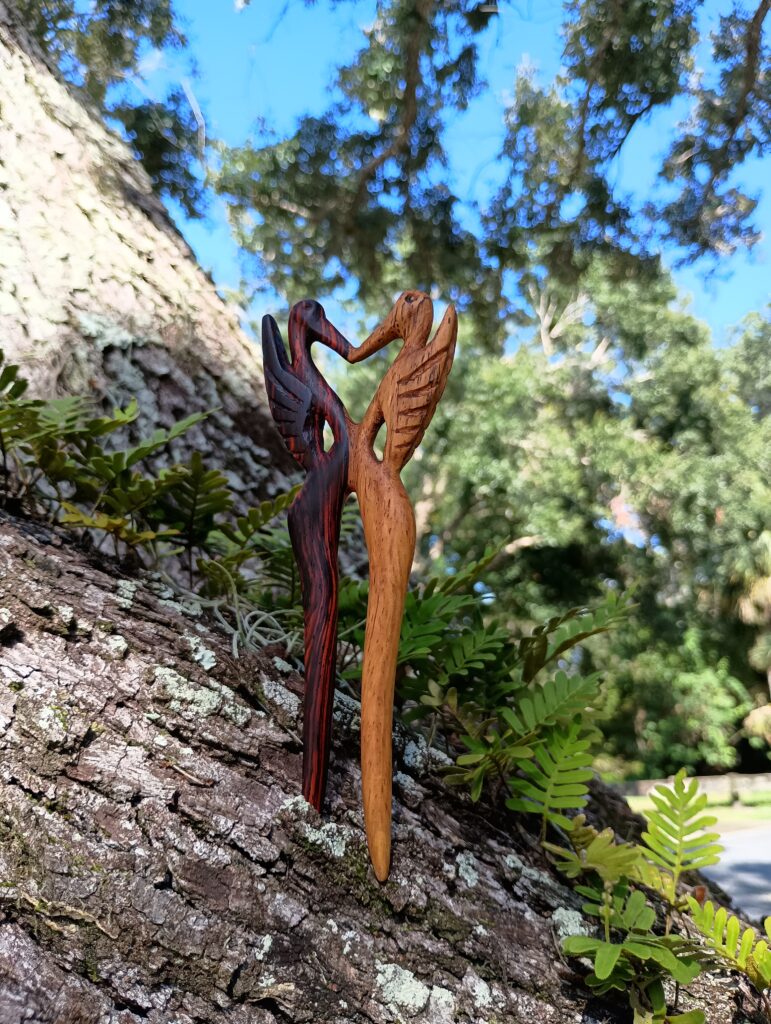
The first version of the sandhill crane was a failure, with awkward proportions and misplaced eyes. For the second version, I used cherry, which isn’t quite tough enough for this particular design, where only the waist area and a very small portion of the two beaks hold it together. I broke that one testing its strength, and I wasn’t all that sad to do so. Handmade hairpins have been tricky, but enjoyable projects.
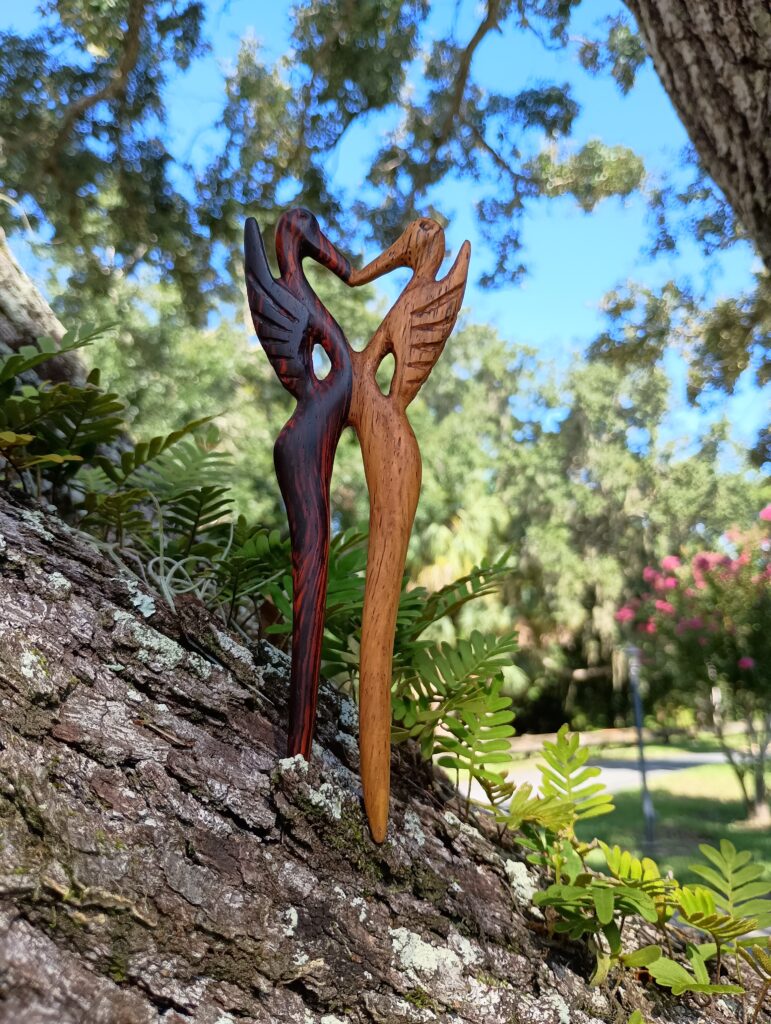
The third version I consider a success, although little of it resembles what anyone would identify as a sandhill crane. For a third attempt approached with only modest interest, where it may fail to impress others, for me it is a manifestation of a meaningful idea that is original and certainly has potential for future editions and variations.
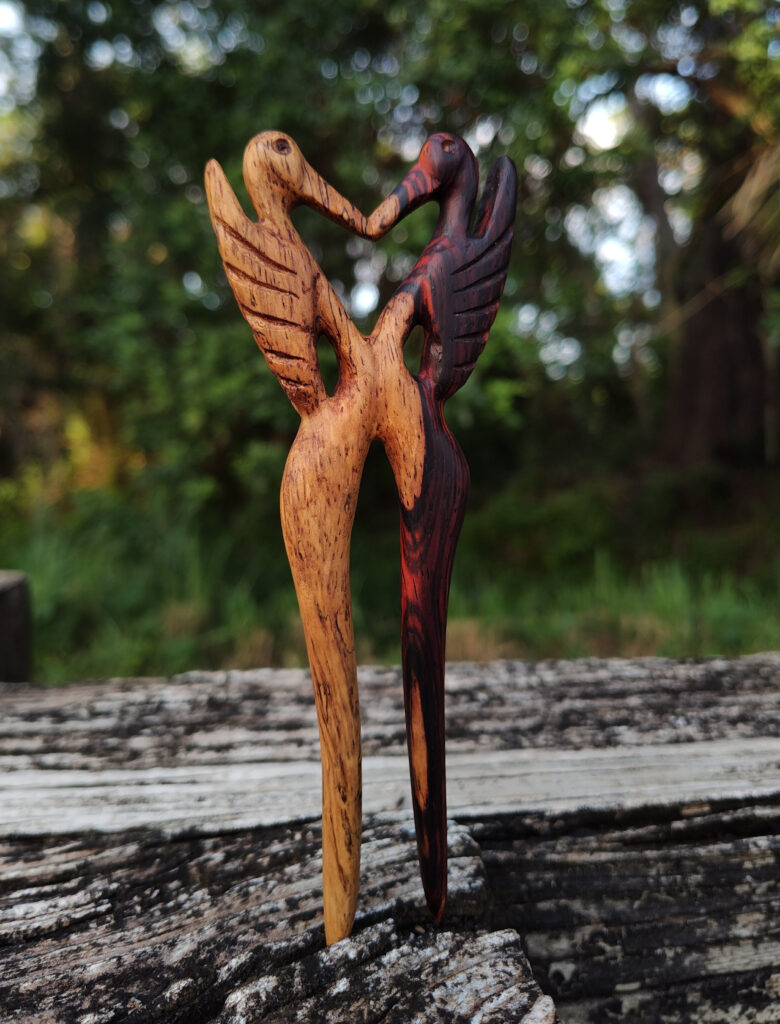
One side is more variegated, with the sapwood and heartwood blending asymmetrically. The other side splits the two evenly, showing one dark and one pale crane. I took the time to split the wings for added detail, but it’s subtle.
If I endeavor a forth or other edition, I suspect it will improve which each. Below is my first attempt at a dragon hairpin, and it’s quite evident as such; a first attempt that is — not necessarily a dragon. Future editions will improve drastically.
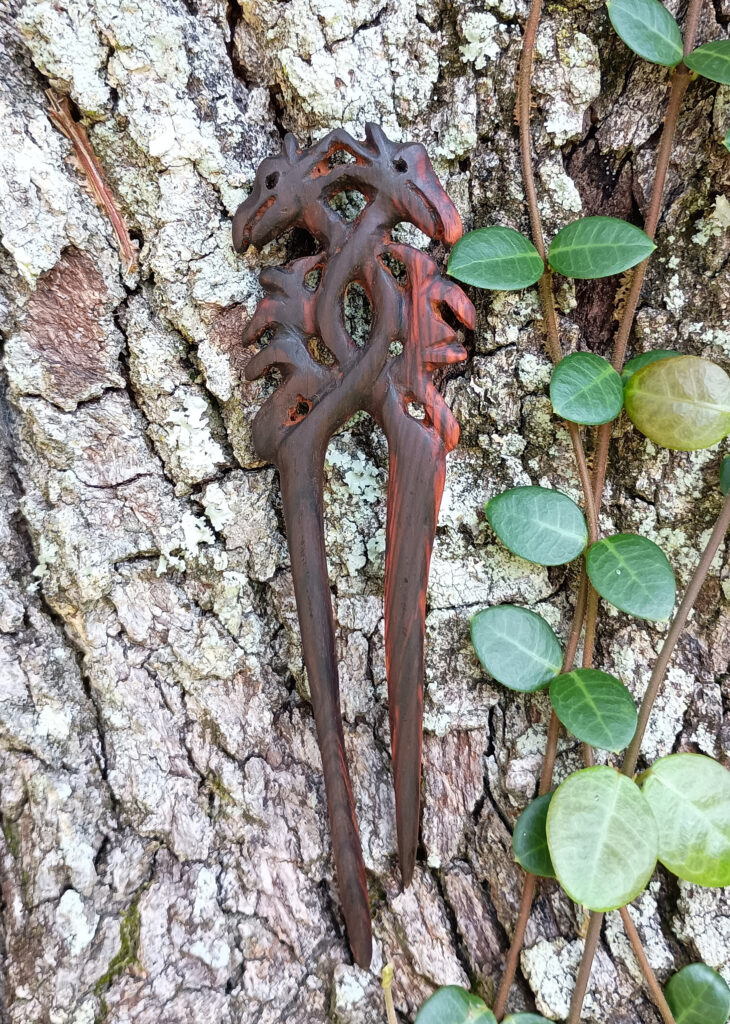
After a year of working with cocobolo, I have become sensitized to it. Carving sessions which cover me in dust, especially on hot, humid days, cause a rash, lasting for up to 5 days. It’s bearable, but a nuisance. The good news is that despite being sensitized, none of my utensils, including my cocobolo pipe stem bother me at all. But I suspect my utensil efforts are ending. With no public interest and the extensive efforts involved in fine handcrafted utensils, I am moving to handmade hairpins for now, which are less immersive and use much less resources while offering myriad opportunities for different concepts.